The rise of artificial intelligence has revolutionized content creation, offering businesses unprecedented speed and scale. For e-commerce, this means the promise of generating thousands of unique product descriptions in mere moments, potentially freeing up countless hours for marketing teams. But as businesses increasingly turn to tools like ChatGPT and similar AI writers, a critical question arises: how do AI-generated product descriptions impact search engine optimization (SEO)? Are we heading towards a future of efficiency and higher rankings, or risking penalties and diluted brand voice?
This isn’t a simple black-and-white issue. The answer depends heavily on how you use AI and how AI effects. While AI product descriptions offer undeniable benefits in terms of speed and volume, their impact on your SEO strategy on content requires careful consideration. This post will delve into the nuances of using AI for your e-commerce product descriptions, examining the potential advantages and pitfalls, and providing a clear roadmap for leveraging AI to help, not harm, your SEO efforts.
AI Product Copy: Quick Take
- Use AI to accelerate drafting, not to replace product expertise.
- Verify facts, claims, specifications, and originality before publishing.
- Write for shoppers first, then optimize naturally for search.
In This Guide: Read the sections below for the practical details and implementation steps.
What is a Product Description in ecommerce?
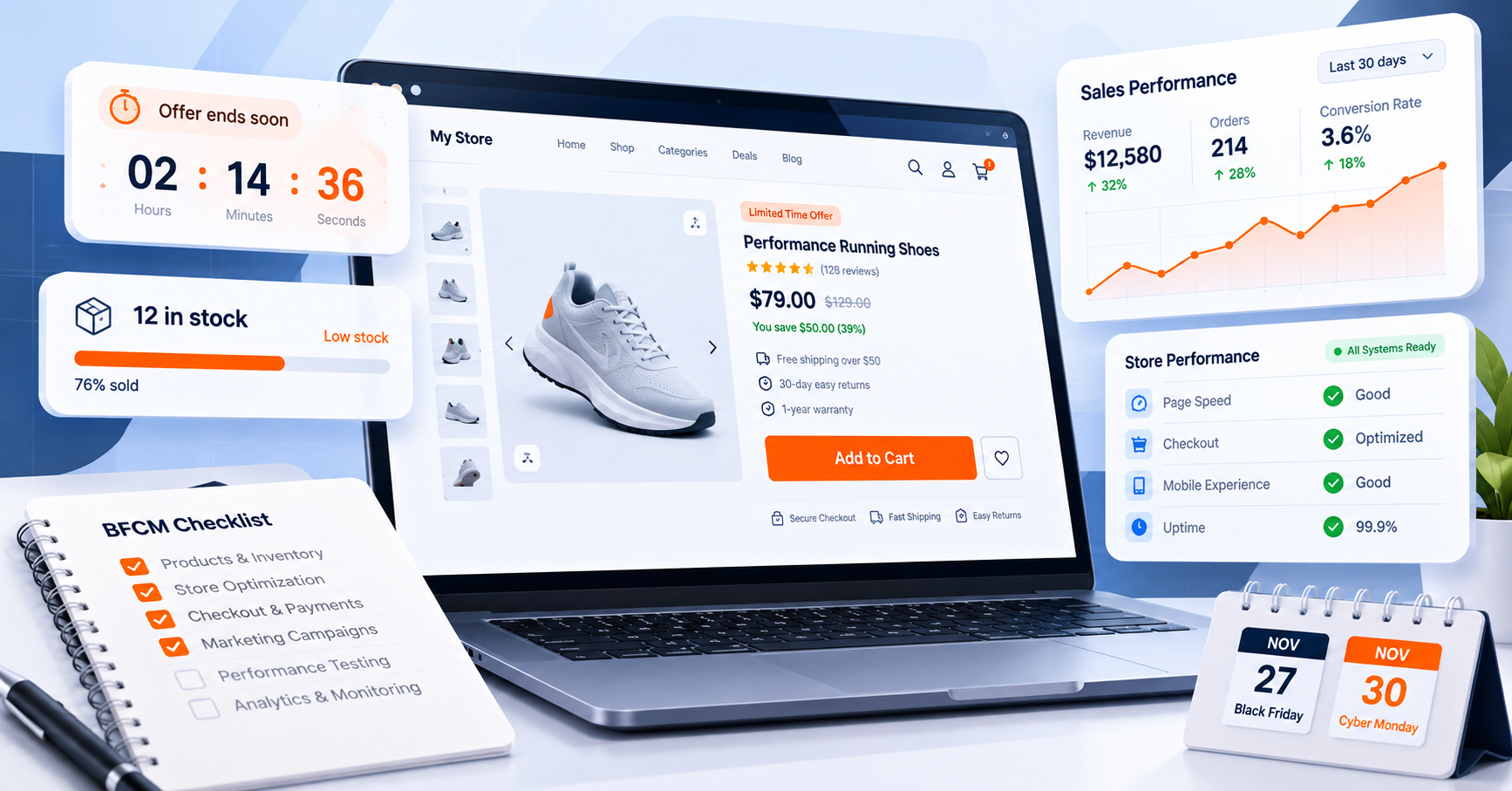
In e-commerce, a product description is the marketing copy used to explain what a product is and why it’s worth purchasing. It serves as your “virtual salesperson,” filling the gap left by the absence of a physical shopping experience. A high-quality description does more than just list technical specifications like size, material, or weight; it focuses on the benefits those features provide. For example, instead of just stating a jacket is made of “Gore-Tex fabric,” an effective description explains that this material “keeps you bone-dry during heavy rain while allowing your skin to breathe,” directly addressing the customer’s needs and pain points.
Beyond persuasion, product descriptions play a critical role in Search Engine Optimization (SEO) and operations. By incorporating relevant keywords that customers use in search engines, well-written copy makes your products easier to find on Google or Bing. This strategy drives organic traffic to your store without the constant need for paid ads. Furthermore, clear and accurate descriptions help manage customer expectations, which significantly reduces the likelihood of costly returns and negative reviews. By providing all the necessary information—such as dimensions, care instructions, and use cases—you build a foundation of trust that encourages hesitant browsers to become loyal buyers.
Is AI Good for Writing Product Descriptions? Pros and Cons Explained
Yes, it can be good to use AI for product descriptions, but only if done the right way. AI makes the process faster, easier, and more scalable, especially for ecommerce stores with hundreds or even thousands of products. It can help maintain a consistent tone, insert keywords for SEO, and save a lot of time compared to writing everything manually. For businesses that want efficiency and quick results, AI can be a great support tool.
However, relying only on AI has some drawbacks. AI-generated content can sometimes sound generic, repetitive, or even inaccurate. Search engines may not reward descriptions that lack originality, which could hurt SEO instead of helping it. That’s why the best approach is to let AI create a first draft and then refine it with human editing. This ensures your product descriptions are not only SEO-friendly but also engaging, accurate, and tailored to your brand voice.
The Benefits of AI Product Descriptions: Speed, Scale, and Efficiency
The appeal of using AI to generate product descriptions is immediately apparent, especially for e-commerce sites with vast inventories.
- Unprecedented Speed: AI can generate descriptions in seconds, a process that would take human writers hours or days. Consequently, you can quickly populate new product pages.
- Scalability for Large Inventories: For stores with thousands of SKUs, manually writing unique descriptions for each product is a monumental task. Therefore, AI product descriptions offer a viable solution for scale.
- Cost-Effectiveness: Automating content creation can significantly reduce the cost per description, allowing marketing budgets to stretch further.
- Overcoming Writer’s Block: AI can provide a strong starting point or fresh angles for human writers facing writer’s block, making the content creation process smoother.
How AI Helps Your Product Descriptions Rank Better on Google
When used strategically, AI product descriptions can offer distinct advantages for your SEO.
1. Filling Content Gaps and Improving Indexing
- More Unique Content: Many e-commerce sites suffer from thin content or duplicate manufacturer descriptions. AI can quickly generate unique text for every product. Therefore, this gives search engines more unique content to crawl and index.
- Increased Keyword Coverage: AI tools can be prompted to include relevant long-tail keywords and semantic variations. Consequently, this helps your product pages rank for a wider array of search queries.
- Faster Time-to-Market: Quickly getting unique, optimized descriptions online means search engines can discover and index your new products faster. This is a clear benefit for AI product descriptions strategy.
2. Enhancing Readability and Structure
- Consistent Formatting: AI can be trained to follow specific formatting guidelines, ensuring consistent use of headings, bullet points, and paragraph length. Therefore, this improves readability for both users and search engines.
- Clearer Communication: Properly prompted AI can craft concise and clear product benefits, making it easier for customers to understand your offerings. Ultimately, this also improves the effectiveness of AI product descriptions.
The Risks of AI-Written Product Descriptions and How to Fix Them
Despite the benefits, relying solely on unedited AI product descriptions carries significant risks that can negatively impact your SEO.
1. Google’s Stance on AI-Generated Content
- Focus on E-E-A-T: Google emphasizes Experience, Expertise, Authoritativeness, and Trustworthiness (E-E-A-T). Purely AI-generated content often lacks genuine experience or unique insights. Consequently, content that doesn’t demonstrate E-E-A-T may struggle to rank.
- Quality Guidelines: Google’s guidelines prioritize helpful, original, and people-first content. If AI product descriptions are repetitive, inaccurate, or lack human nuance, they may be deemed low-quality. This means they could potentially face ranking demotions.
2. Lack of Originality and Human Touch
- Generic Language: AI often generates safe, generic, and sometimes repetitive language. Therefore, this can lead to bland product descriptions that fail to stand out or engage human readers.
- Absence of Brand Voice: AI struggles to capture a unique brand voice, personality, or emotional connection. Specifically, this makes your AI product descriptions sound impersonal and forgettable.
- Inaccuracies or Hallucinations: AI can “hallucinate” facts or details, leading to incorrect product information. Ultimately, this damages trust with both customers and search engines.
3. Duplicate Content Concerns (Subtle Form)
- Unintentional Duplication: While AI generates unique phrasing, if it pulls from common knowledge bases or similar input prompts across multiple products, the ideas or key selling points might be too similar. Consequently, this can create subtle duplicate content issues.
- Keyword Stuffing: If not carefully managed, prompts for AI product descriptions can lead to over-optimization and keyword stuffing, which is a black-hat SEO tactic that Google penalizes.
How to Use AI to Write SEO-Friendly Product Descriptions
The key is to use AI as a powerful assistant, not a replacement for human oversight. Here’s how to harness AI product descriptions for SEO success.
AI as a Starting Point, Not the Final Word: Use AI to generate drafts or ideas. However, always have a human editor review, refine, and enhance the output. This is crucial for successful AI product descriptions.
Infuse Human Expertise and Brand Voice: Edit the AI-generated content to inject your unique brand personality, specific benefits, and compelling storytelling. Specifically, add details that only a human who understands your target audience and product can provide.
Focus on E-E-A-T: Add elements of experience (e.g., “Our team tested this product…”), expertise (e.g., “Developed by industry experts…”), authoritativeness (e.g., “Voted best in class by…”), and trustworthiness (e.g., “Backed by our 30-day guarantee…”).
Strategic Keyword Integration: Use AI to identify relevant keywords, but integrate them naturally. Avoid keyword stuffing. Therefore, ensure the language flows organically for human readers.
Fact-Check Everything: Always verify any facts, specifications, or claims generated by the AI. Ultimately, accuracy is paramount for trust and credibility.
Combine with Other SEO Best Practices: Ensure your product pages also have high-quality images, customer reviews, clear calls to action, and fast loading times. AI product descriptions are just one piece of the SEO puzzle.
Conclusion: AI as a Partner, Not a Substitute, for SEO
The question of whether AI-generated product descriptions harm or help SEO isn’t an either/or scenario. When misused, they can indeed lead to generic, low-quality content that struggles to rank and alienates customers. However, when integrated intelligently as a tool to assist human writers and editors, AI can dramatically boost efficiency, ensure comprehensive content coverage, and ultimately contribute positively to your SEO efforts.
The future of effective e-commerce content lies in a synergistic approach: leveraging AI for speed and scale, while reserving human creativity, empathy, and expertise for quality, brand voice, and genuine connection. Embrace AI as your content partner, and you will unlock new levels of efficiency and SEO success for your product pages.
Design and speed go hand-in-hand for high-ROI stores. To complete your 2026 strategy, we highly recommend our next guide: Optimizing WooCommerce Product Page Performance. It’s the ultimate blueprint for a faster, more profitable store. Additionally, in WC Booster, you can access amazing product blocks designed to enhance your eCommerce store layout and product presentation. It’s highly recommended to explore them if you want to grow faster and stand out in today’s competitive online market.